Grade 1
Grade 1 math in Ontario: what to expect and where kids get stuck
By Mr. Hafiz · 4 min read
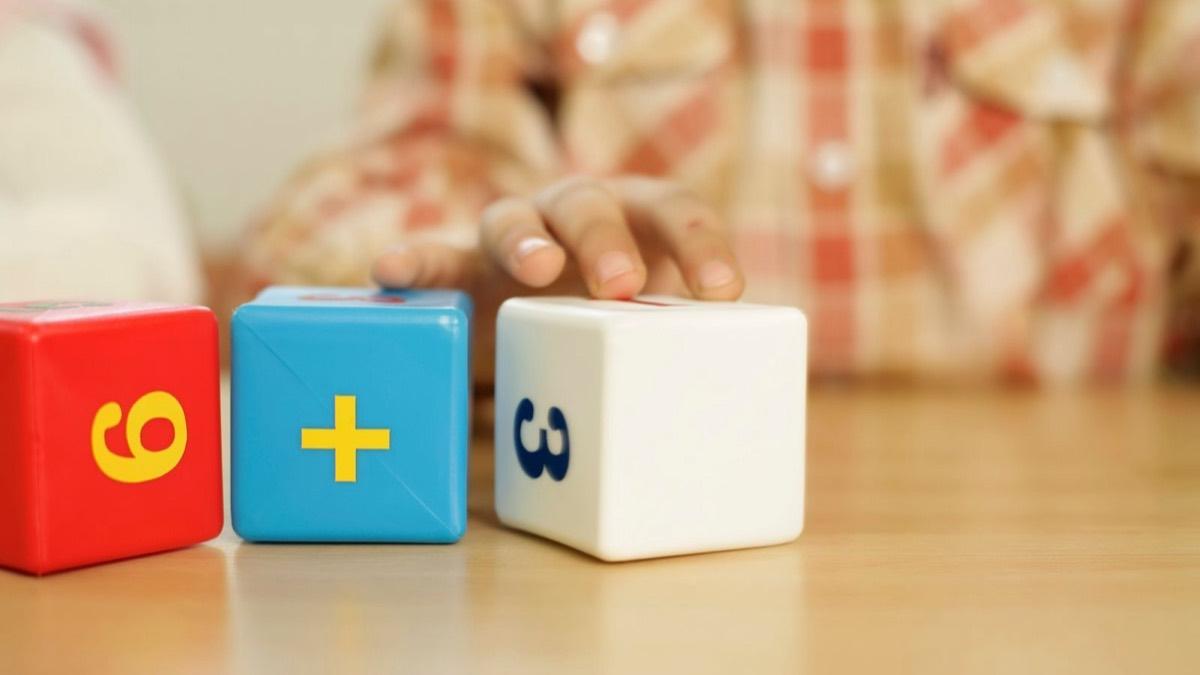
Your child isn't bad at math. Grade 1 is the first time math becomes a school subject with its own words and its own symbols, and that is a big step for a six-year-old. Most early worries come from one small idea that was learned once, not practiced, and then built on.
Here is what the year looks like, where children tend to stumble, and what you can do at home without buying anything.
What Grade 1 math covers
Ontario's 2020 math curriculum for Grades 1 to 8 is organized into strands, and Grade 1 spends most of its time on number. In the lessons we teach, that looks like this:
- Counting forward and back, and knowing which number comes just before and just after.
- Making 10 in different ways (3 and 7, 4 and 6), a skill the Grade 1 lessons come back to again and again.
- Adding and subtracting small numbers, using strategies such as counting on, doubles and making 10 first.
- Tens and ones: seeing that 34 is 3 tens and 4 ones.
- Comparing numbers, and what the equal sign really means.
- Skip counting by 2s, 5s and 10s, and simple patterns.
- Coins, and telling time to the hour and the half hour.
Where children get stuck
None of these means a child is behind. They are the places where a child can easily go along with the lesson without really owning it.
Counting from the start every time. A child who adds 8 + 3 by counting 1, 2, 3, 4 all the way up is working very hard. The step forward is learning to start at the bigger number and count on.
The equal sign. Many children read = as "the answer comes next". In 9 = 4 + 5, it means "the same amount on both sides". If that is shaky, missing-number questions feel unfair.
Teen numbers. We say "thirteen", but we write the 1 first. It is normal for children to flip 13 and 31 for a while.
Subtracting. Taking away feels like the opposite of everything else they have learned. Thinking "9 plus what makes 13?" often helps more than counting backward.
Children rarely say any of this out loud. They don't want to be left out, and asking for help can feel like admitting something. That is why a short, friendly look at home matters.
A worked example: making 10 first
Here is a strategy children use for adding past 10. Say your child is stuck on 8 + 5.
What is 8 + 5?
- Look at the bigger number first. 8 is close to 10, so make 10.
- Ask how many more 8 needs to reach 10. It needs 2.
- Break the 5 into 2 and 3. Now 5 is 2 + 3.
- Add the 2 to the 8: 8 + 2 = 10.
- Add the 3 that is left: 10 + 3 = 13.
Answer: 8 + 5 = 13.
Notice that no counting from 1 is needed. The child only uses the pairs that make 10, which they can practice anywhere. A ten frame (two rows of five boxes) makes this visible: 8 counters leave 2 empty spaces, and the 5 splits to fill them.
Try this at home tonight
You need a pile of 10 small things (buttons, dried beans or coins) and a sheet of paper with two rows of five boxes drawn on it.
- Ask your child to put some of the buttons in the boxes, for example 6.
- Ask, "How many empty boxes?" They can count the empty ones, and then say the number sentence: 6 and 4 make 10.
- Take turns. One person picks a number of buttons, the other says how many more make 10.
- After a few rounds, hide the frame and ask the same question out loud while you walk to the kitchen: "What goes with 7 to make 10?"
Five minutes is plenty. If your child gets frustrated, stop and come back tomorrow. The goal is that they don't dislike it, and quick, easy wins are how that happens.
Why short and regular beats long and rare
Understanding an idea is not the hard part. Keeping it is. A child who sees the pairs that make 10 for five minutes on most days will have them ready when the next lesson builds on top of them.
Next steps
If you'd like to see where your child stands in Grade 1 math, start with the free 15-question check-in. There is no mark, and it shows what is solid and what needs a little practice. Your child can also play the free math games.
If a few topics feel shaky, our small-group Grade 1 course covers the hardest concepts of the year, live on Zoom. We start by finding out where your child is, and I won't recommend it if they don't need it.
Not sure where your child stands? Start with a free 15-question check-in. It takes about 15 minutes, has no mark, and shows what is solid and what needs practice.
Start the free check-inPractice with the free math games, no card needed.
Play the free gamesWant live help? Take a look at Grade 1 Toughest Topics, taught live on Zoom in a small group.
See the program